‘Not Dying’: The Legal Standard of Care
There’s a little black gelding we often think about.
On paper, he looks fine. He has access to shelter, clean water, and his body condition is acceptable. From the outside, he doesn’t scream “emergency.”
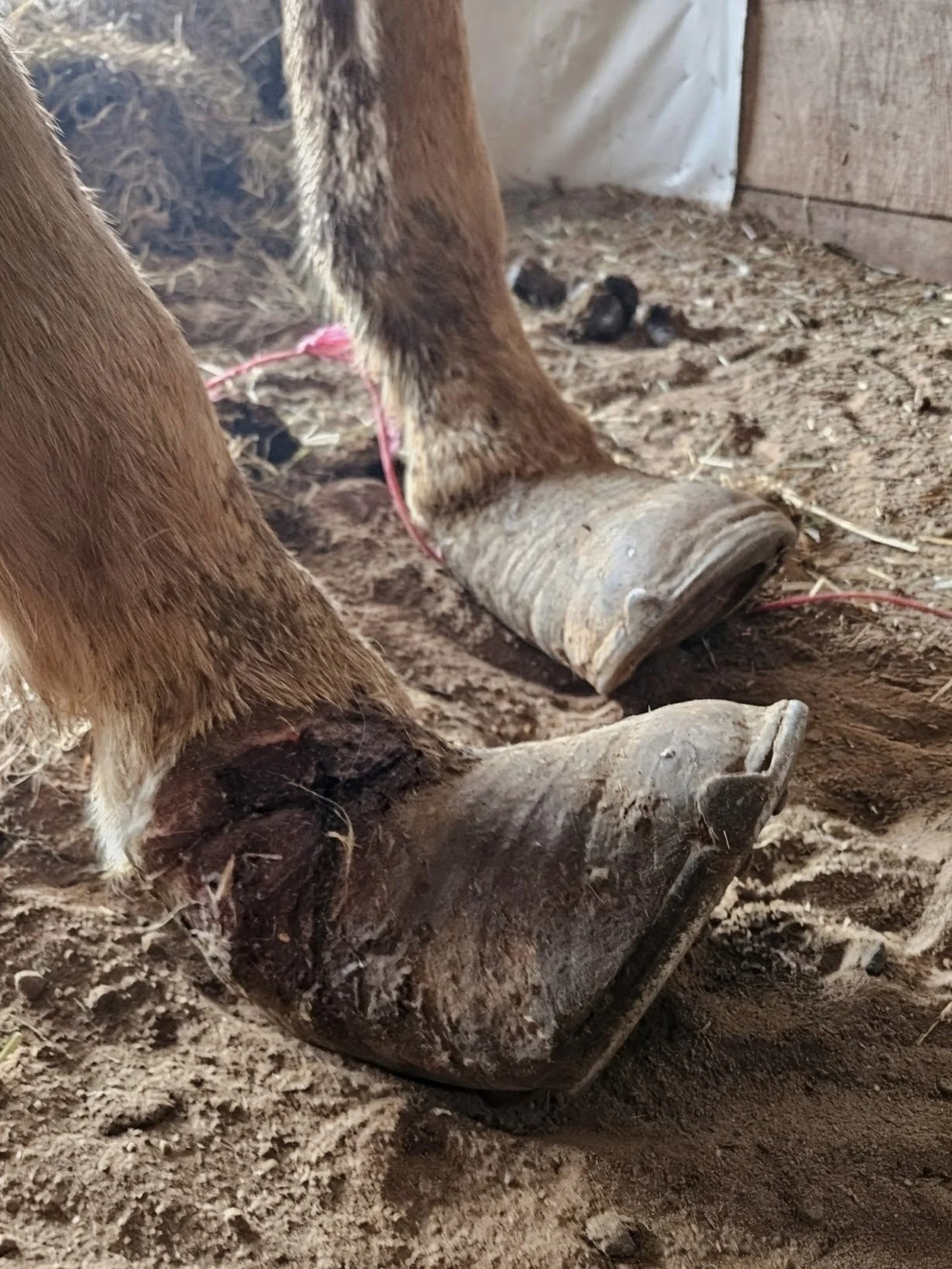
But when you look down, you see it. Hooves so overgrown they haven’t been properly addressed in years.
The explanation we were given was familiar: “He has behavior issues.”
The owner said he won’t tolerate a farrier, that sedation is planned, that corrective care is coming, that it just takes time.
And maybe it does.
But here’s the question no one could answer:
“If a plan existed, why were his hooves allowed to reach that point in the first place?”
The Hidden Pain
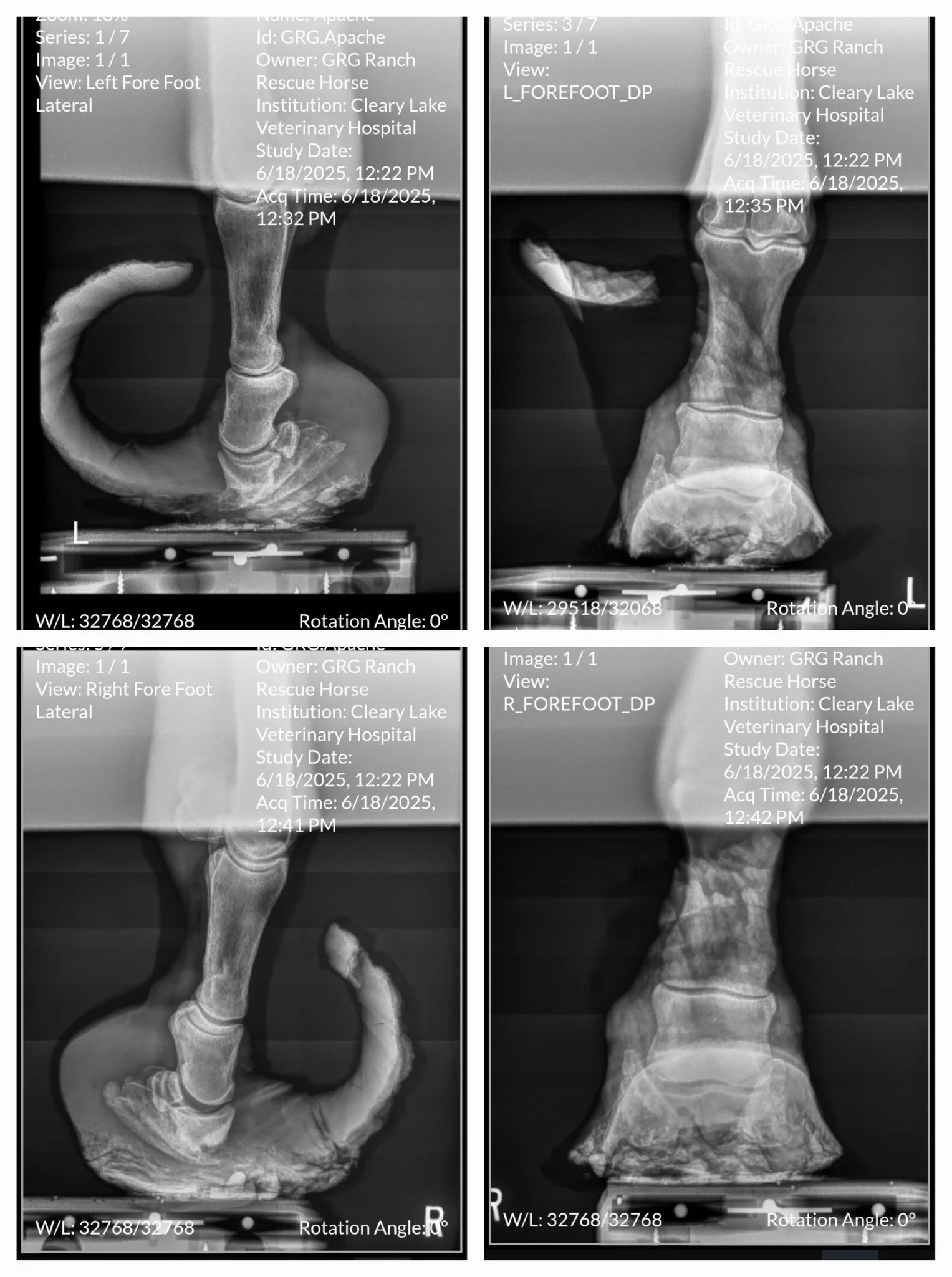
Overgrown hooves aren’t cosmetic.
They change the mechanics of the entire body, affecting bones, joints, tendons, circulation, posture, and comfort.
Pain doesn’t always present as collapse or starvation. Sometimes it shows up as compensation, stiffness, or quiet suffering.
And that’s where the law struggles:
Suffering is harder to prove than starvation.
You can’t see inside a hoof without X-rays.
You can’t get X-rays without a veterinary exam.
Under current law, intervention often doesn’t happen unless an animal is visibly starving, collapsing, or near death.
‘Not dying’ becomes the silent benchmark.
And the horse waits.
Horses in the Legal Gray Area
Horses are incredible and unique creatures—and unfortunately, they’re equally unique in the eyes of the law.
In Minnesota, horses are classified as livestock for many legal purposes, and the standards and enforcement mechanisms applied to companion animals do not extend to horses.
On paper, minimum care requirements exist — food, water, and shelter—and anti-cruelty statutes apply broadly to “animals.”
In practice, those standards are designed to ensure survival, not comfort, mobility, or long-term soundness for a 1,000 lb animal.
That’s the gap:
Chronic pain isn’t always legally actionable.
Hoof neglect isn’t always considered urgent.
Owners can claim intent while outcomes continue to deteriorate.
Without authority to mandate early veterinary evaluations, rescues are often forced to wait until the overworked and stretched-thin Humane Officers and law enforcement officers can legally step in.
Falling Through the Cracks
A horse can be standing, eating, and not visibly dying — and still be living in constant pain.
Law enforcement and others often lack understanding of:
What’s normal for a horse
How these stoic animals show suffering
The harder cases are the ones like this gelding. The ones where the suffering is real, the damage is ongoing, and the clock keeps ticking.
By the time the situation becomes legally undeniable, the harm can be irreversible.
A Recent Rescue
We’ve responded to emergency seizures where horses were already gravely ill. Those cases are heartbreaking, but at least the law allows intervention.
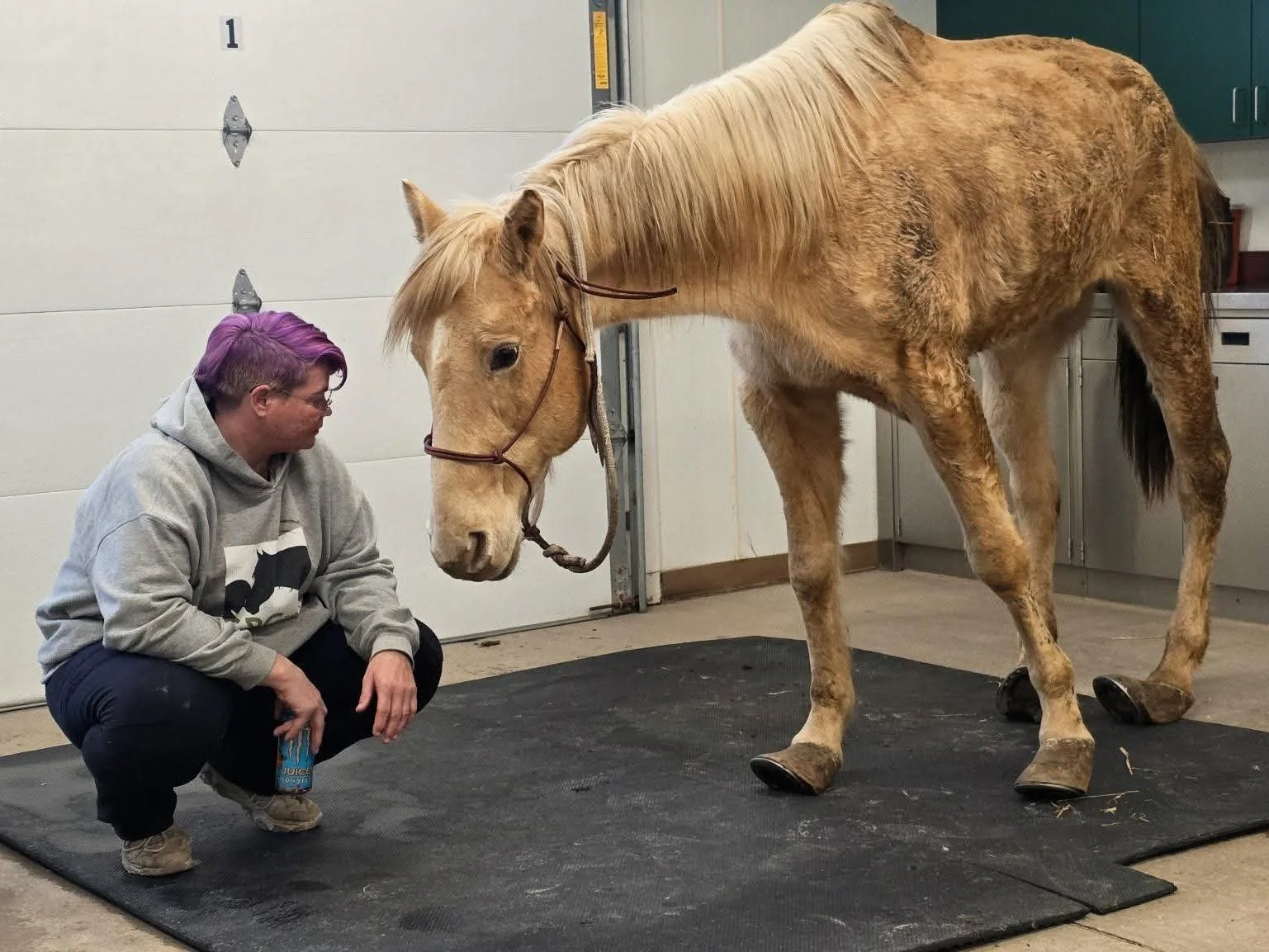
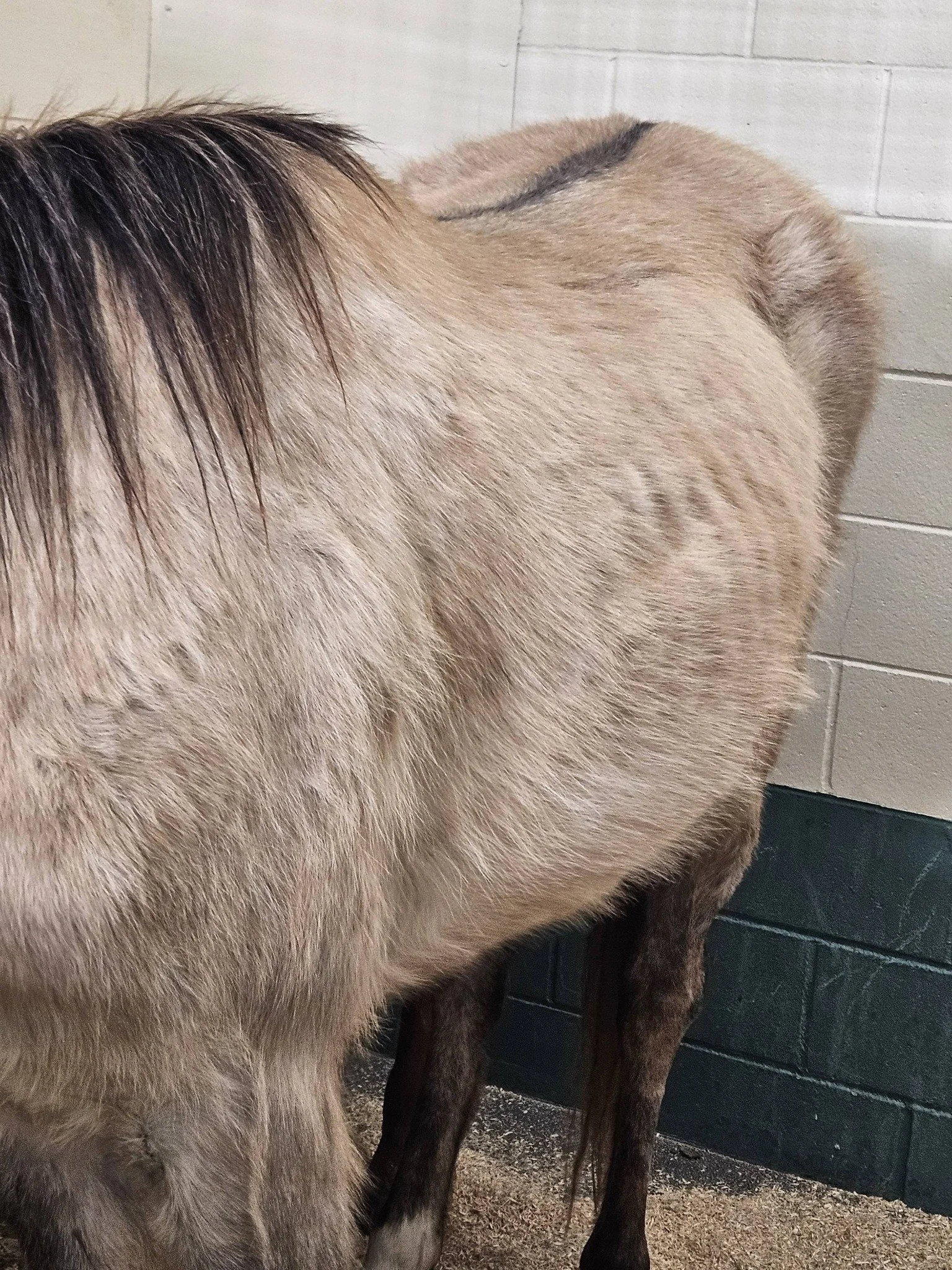
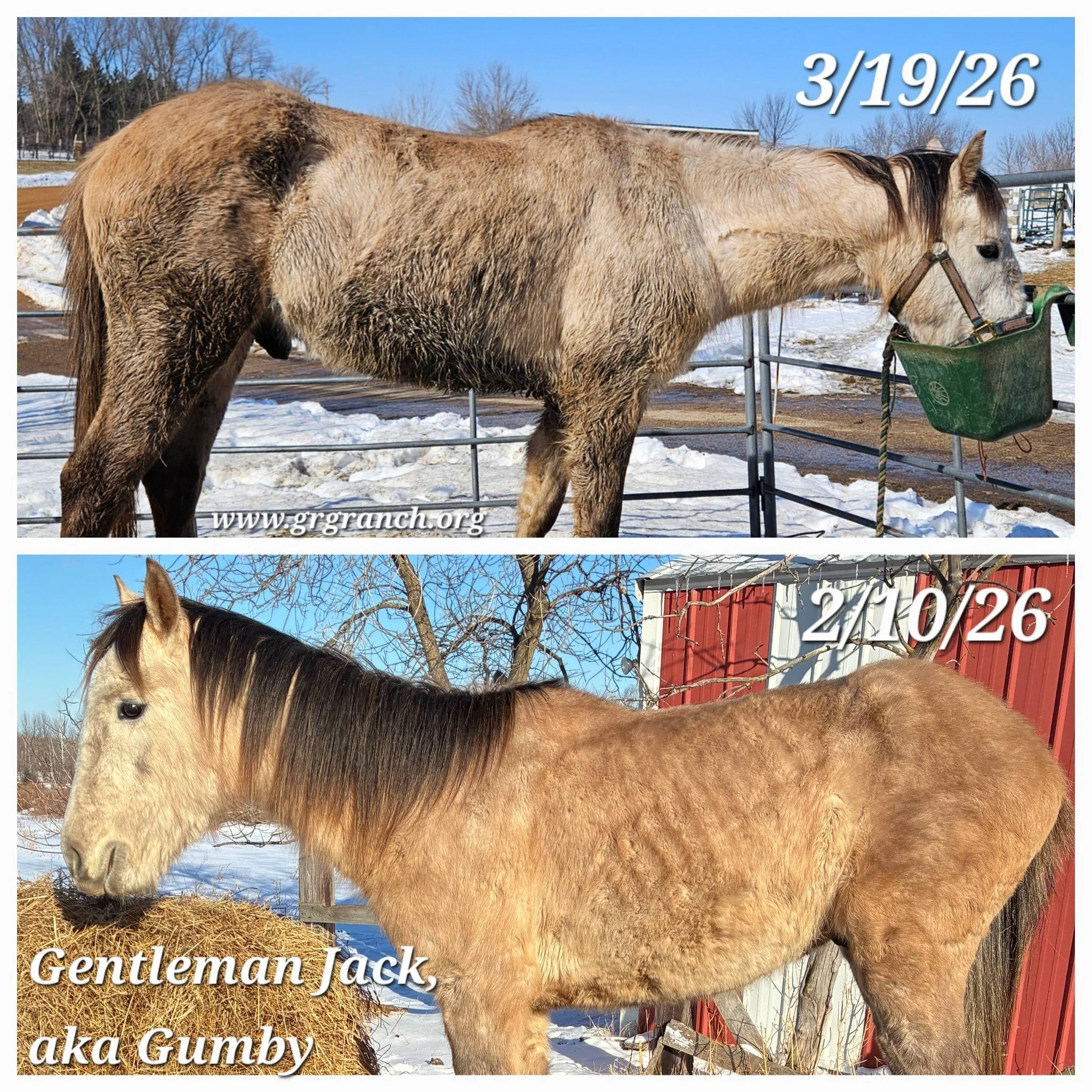
Just recently, we were called to a property where four horses were living under conditions that were deteriorating. Their thick winter coats hid ribs that were all too visible if you looked closely. A two-year-old colt looked decades older from a distance.
There were several starving and pregnant sheep on the property—one had already died, and another had to be euthanized on site under the veterinarian’s direction.
Despite the visible signs and some of the shared details, some social media commenters argued, “They don’t look that bad. Only one sheep was dead. Seizure wasn’t necessary.”
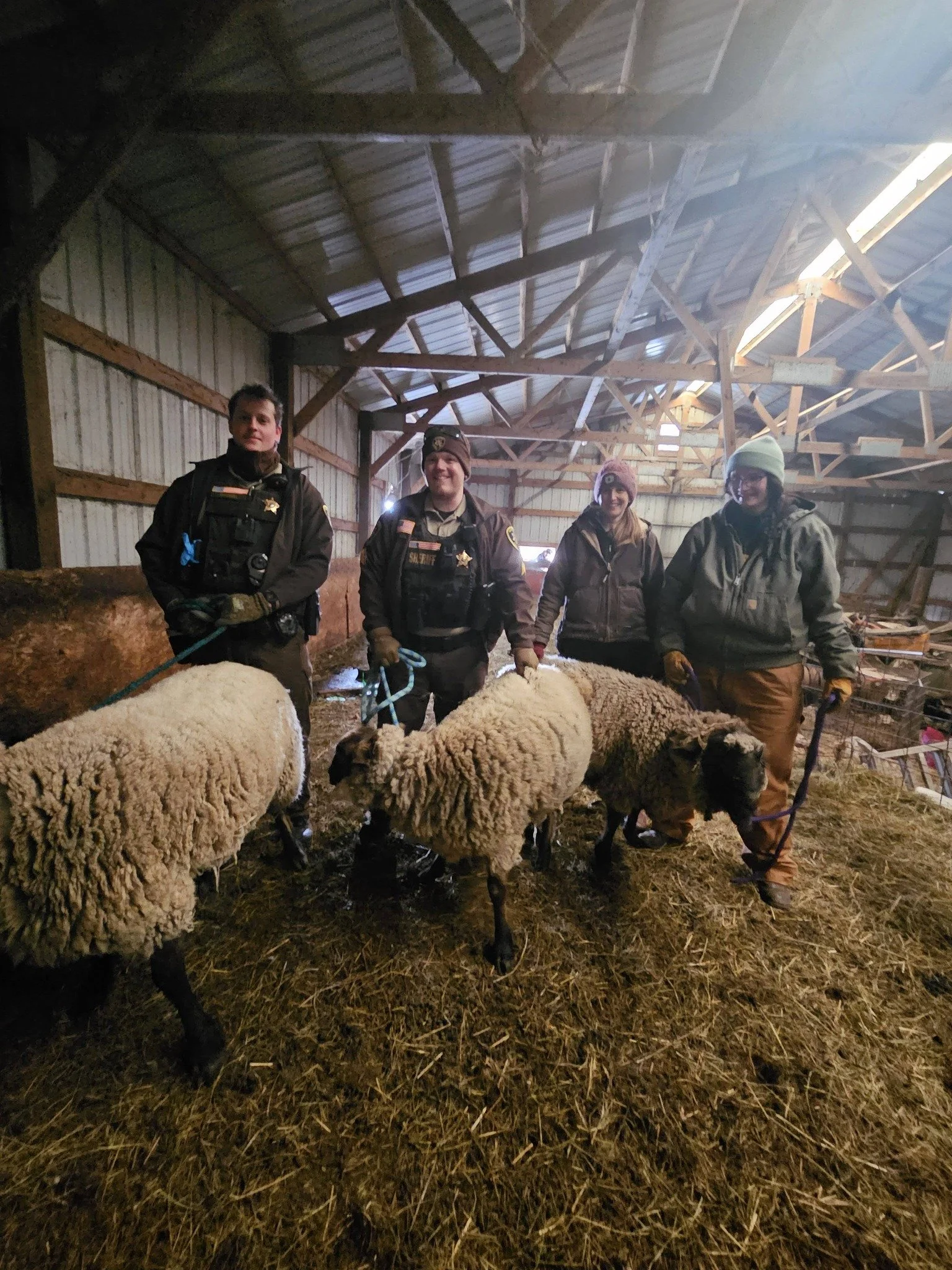
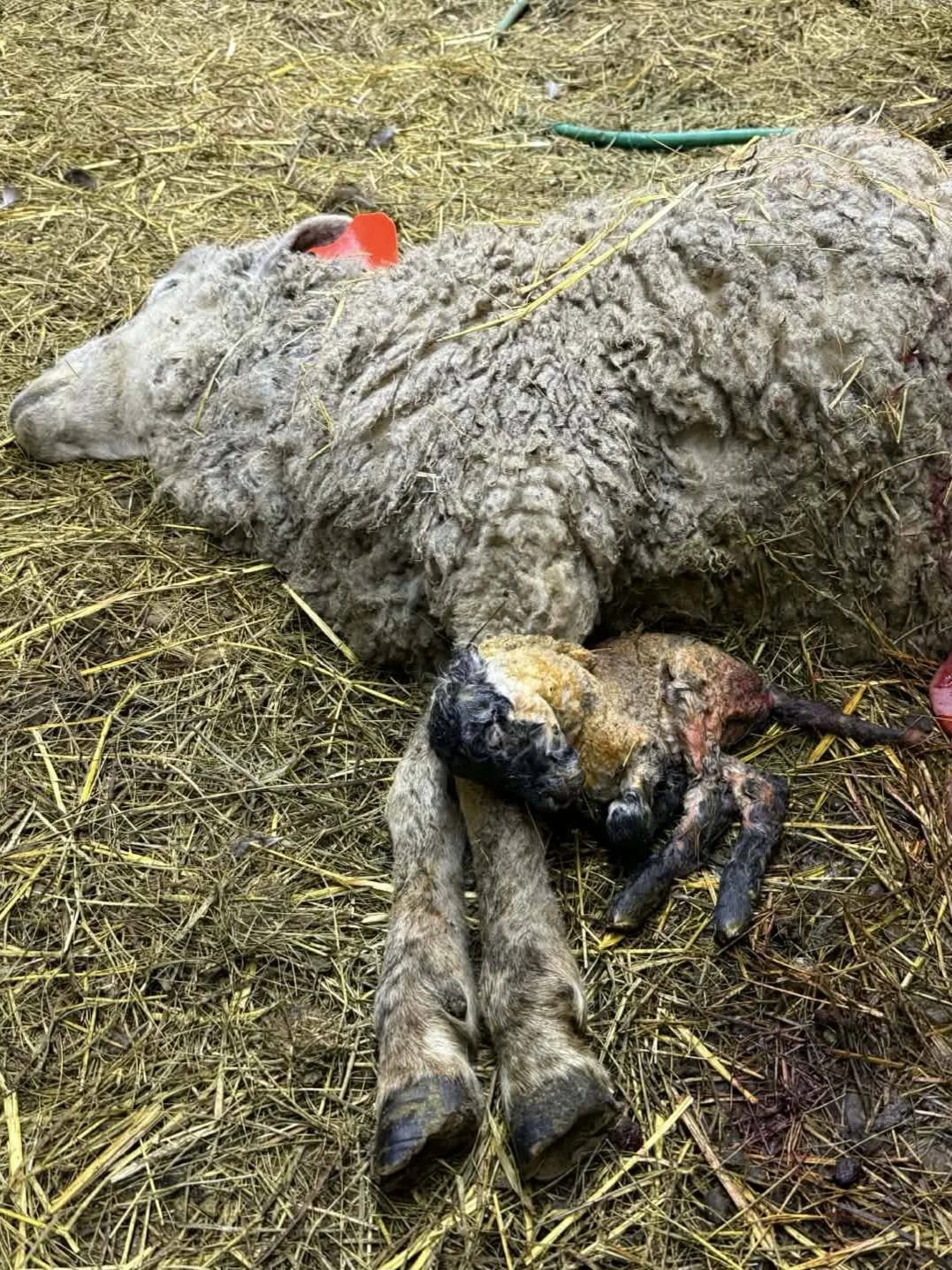
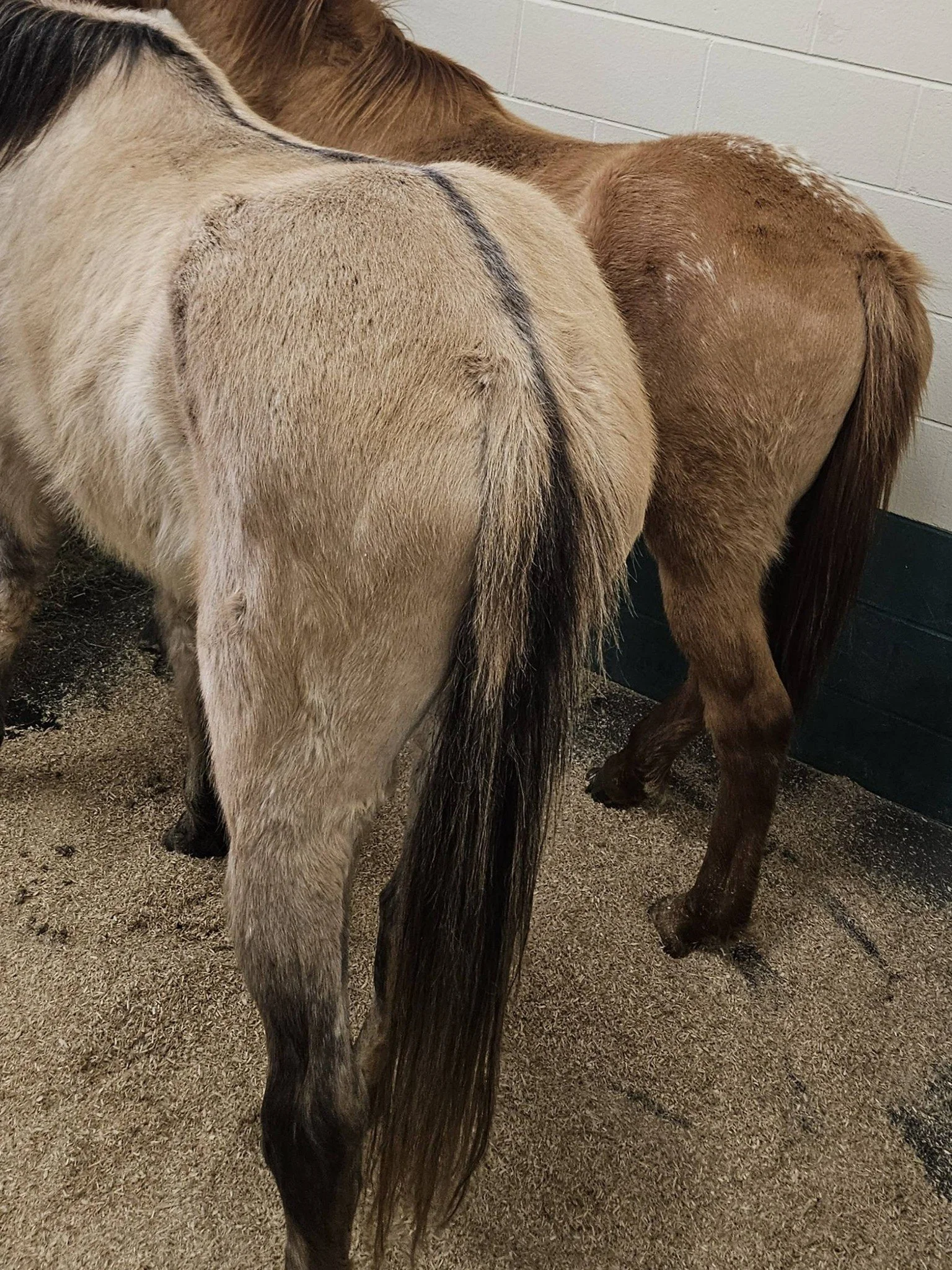
Here’s the reality: the owner had been offered help for years and refused. The unfortunate part was that the ‘not dying’ standard had to take the lives of two sheep before help arrived.
Today, these animals have a chance. They’re putting on weight, learning to trust humans again, and even the most skittish of the bunch, who previously couldn’t be approached within 20 feet, now takes treats from a hand. They aren’t just surviving—they’re on the road to thriving.
And yes, some people still say, “They weren’t dying; this wasn’t necessary.” But the truth is clear: these horses are living proof that intervention works.
What Needs to Change
Horses need protections that allow earlier, enforceable intervention before pain becomes catastrophic.
Laws must recognize that:
Chronic pain is neglect, even when food, water, and shelter are technically present.
Hoof care, mobility, and veterinary oversight are essential—not optional.
Authorities need the ability to require veterinary exams when there is clear evidence of prolonged neglect, not only when a horse is already in crisis.
Accountability must be based on outcomes, not promises of future care.
Humane and Enforcement Officers should receive specialized training in equine care and needs.
Law enforcement must be empowered to consult with qualified professionals when something seems off.
Because horses shouldn’t have to be dying to deserve help.
Pain should be actionable.
Suffering should count.
What You Can Do
If this story makes you uncomfortable, it should.
Talk about it.
Share it.
Ask your legislators how equine neglect is defined and enforced
Support rescues, veterinarians, and humane professionals advocating for clearer laws and better tools to protect horses.
Because waiting until it’s an emergency is already waiting too long.